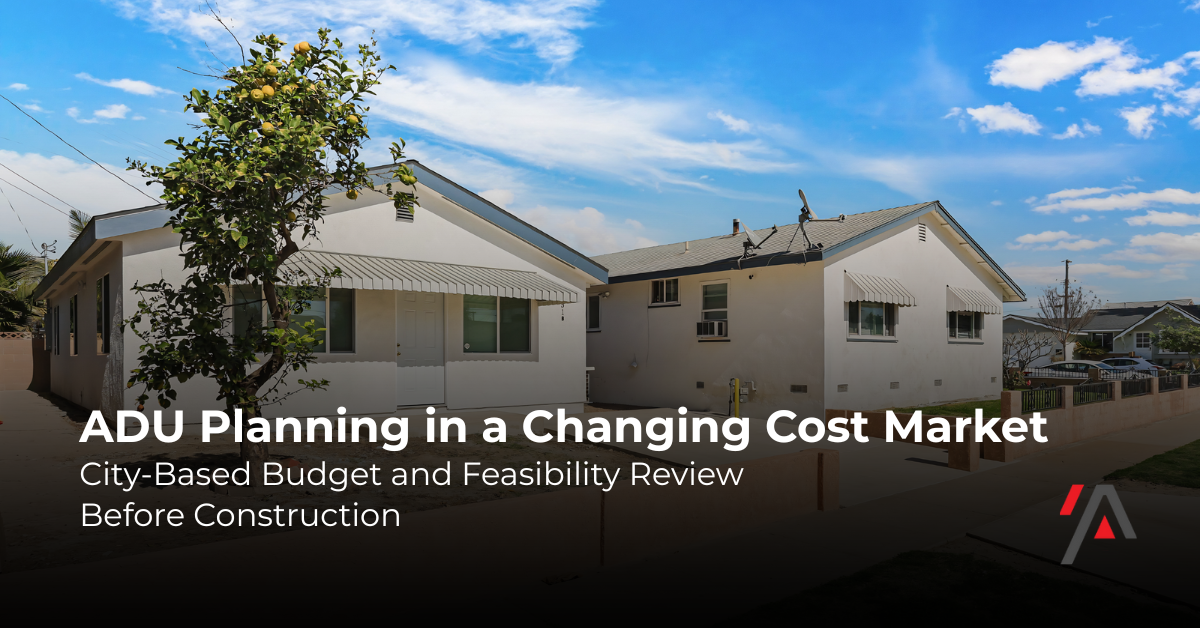
Avorino explains how rising construction costs and its AI ADU calculator help Orange County homeowners review ADU budgets earlier.
IRVINE, CA, UNITED STATES, June 25, 2026 /EINPresswire.com/ — Avorino, a general contractor in Orange County, California, is highlighting how rising and fluctuating construction costs are shaping the way homeowners plan accessory dwelling unit projects across Orange County and Southern California.
As labor rates, material pricing, utility requirements, permitting conditions and construction timelines continue to shift, more homeowners are taking a closer look at ADU budgets before moving into design or construction. Instead of starting only with a floor plan or layout idea, many homeowners are now trying to understand estimated cost, project scope, financing direction and property-specific requirements earlier in the process.
Avorino notes that this shift has made early feasibility review more important for homeowners considering garage conversion ADUs, detached ADUs and attached ADUs. To support that planning stage, the company has introduced its own AI-assisted ADU calculator, designed to help homeowners review city-based cost and feasibility information before committing to architectural plans, engineering or permit coordination.
Construction Cost Changes Are Affecting ADU Planning
ADU construction costs can shift for several reasons. Material pricing, labor availability, subcontractor scheduling, utility upgrades, appliance selections, window and door packages, structural requirements and inspection-related work can all affect the final cost of a project.
In Orange County, ADU planning can also vary by city, property type, existing structure and site conditions. A garage conversion ADU in Irvine may involve different planning considerations than a detached ADU in Brea, Fullerton, Anaheim, Costa Mesa, Huntington Beach, Tustin, Yorba Linda, or Garden Grove. Older garages, limited utility access, slab conditions, electrical panel capacity, drainage, ventilation and required upgrades can all influence the scope of work.
Because of these variables, homeowners are becoming more cautious about relying on broad ADU cost averages. A general estimate may provide a starting point, but it may not reflect the specific city, property conditions or project type.
Early Budgeting Is Becoming a Larger Part of ADU Planning
Early budgeting helps homeowners understand whether the intended ADU scope aligns with available funds, financing options and long-term goals.
A project that starts without a realistic cost review may later require design changes, scope reductions, financing adjustments, or timeline delays. This can become more difficult once drawings, engineering, permit work, contractor scheduling or material selections are already underway.
For homeowners planning an ADU for rental income, family housing, guest space, or multigenerational living, early budget planning can help clarify which type of unit may be most practical. A garage conversion ADU may have a different cost profile than a detached ADU. An attached ADU may require different structural and utility coordination than a standalone unit.
Reviewing these factors early gives homeowners a clearer starting point before they invest heavily in the next planning stage.
Avorino’s AI ADU Calculator Supports City-Based Planning
As ADU costs become harder to estimate with broad online averages, more homeowners are turning to planning platforms and ADU calculators before starting design. These tools can help organize early questions around budget, project type, financing and feasibility.
Avorino’s AI-assisted ADU calculator is designed to help homeowners review early planning results based on their city, project type, and project direction. Instead of providing only a general statewide estimate, the calculator is built to reflect local ADU planning factors that may vary across Orange County cities.
For homeowners in Irvine, Brea, Anaheim, Fullerton, Costa Mesa, Tustin, Huntington Beach, Yorba Linda, Garden Grove, and nearby areas, city-specific conditions can affect estimated cost, permitting, site planning, utility work, and construction scope.
The calculator gives homeowners an early way to review cost expectations and feasibility signals before moving into design, engineering, or permit coordination. The goal is to help homeowners better understand whether a garage conversion ADU, detached ADU, or attached ADU may fit their property, budget and long-term goals.
These early calculator results do not replace a full contractor review, site evaluation, financing review, or city approval process. However, they can help homeowners avoid relying only on generic ADU cost ranges that may not reflect their location, property conditions, or intended project scope.
Feasibility Review Helps Homeowners Understand the Full Project Picture
As construction costs continue to fluctuate, feasibility review has become an important part of ADU planning.
A feasibility review may include the property, intended use, estimated cost range, financing readiness, site access, utility requirements, city review path and potential construction challenges. This gives homeowners a more complete picture before deciding whether to move forward.
Avorino’s planning approach focuses on connecting the project vision with real construction factors. This includes reviewing whether the property is better suited for a garage conversion ADU, detached ADU, attached ADU or another residential construction approach.
For homeowners, this early review can help answer practical questions, including whether the project fits the budget, whether financing may be needed, which ADU type makes sense, and what property conditions may affect cost or timeline.
Material and Labor Costs Can Affect the Full Project
Material and labor changes can influence more than the initial construction estimate. They can also affect scheduling, subcontractor coordination, finish selections and closeout timing.
Common cost-sensitive areas in ADU construction include framing, concrete work, electrical systems, plumbing, HVAC, insulation, drywall, windows, doors, roofing, cabinets, flooring, fixtures, appliances and exterior finishes.
When prices or availability change, homeowners may need to adjust selections, revise timing, or review alternatives. Planning early can make these adjustments easier to manage before the project is already deep into design or construction.
Financing Readiness Should Be Reviewed Early
Rising construction costs can also affect financing decisions. If the final project cost is higher than expected, homeowners may need to review home equity options, renovation financing, construction financing, available cash reserves, or rental income expectations.
For ADUs intended to generate rental income, cost planning should be reviewed alongside potential return. A project may still be attractive, but the numbers should be evaluated before design and construction expenses begin.
Early financing review can help homeowners understand whether the ADU scope is realistic, whether changes are needed, or whether the project should be planned in a different way.
Project Scope Should Match the Budget
One of the most important planning steps is aligning project scope with budget.
A homeowner may begin with a larger detached ADU concept, but after reviewing cost, site conditions, utility needs and financing, a garage conversion or smaller attached ADU may be more practical. In other cases, a detached ADU may still be the right choice if the property, budget and intended use support it.
The goal of early planning is not to limit the project. The goal is to help homeowners make decisions with a clearer understanding of cost, feasibility and construction requirements.
Avorino encourages homeowners to review the full project picture before moving too far into design. This includes budget, financing, property conditions, permit requirements, site access, construction sequencing and long-term use.
Supporting More Informed ADU Planning in Orange County
As ADU construction continues across Orange County, homeowners are becoming more aware that successful planning depends on more than choosing a floor plan.
Rising and fluctuating construction costs make early budgeting, feasibility analysis and contractor input more important. Avorino’s AI-assisted ADU calculator supports this early planning process by giving homeowners a city-based starting point before they move into detailed design, engineering, permitting, or construction.
By reviewing cost and feasibility earlier, homeowners can reduce the risk of unexpected cost changes, redesigns and planning delays.
Avorino supports homeowners throughout Orange County and Southern California with ADU construction, garage conversion ADUs, detached ADUs, attached ADUs, custom home construction, commercial construction, permit coordination, inspection scheduling, construction management and project closeout.
About Avorino
Avorino is a general contractor in Orange County, California, specializing in accessory dwelling units, garage conversions, residential construction, custom homes, commercial construction, project planning, permitting, construction management and project closeout support throughout Southern California.
Avorino Construction
Avorino Construction
email us here
Legal Disclaimer:
EIN Presswire provides this news content “as is” without warranty of any kind. We do not accept any responsibility or liability
for the accuracy, content, images, videos, licenses, completeness, legality, or reliability of the information contained in this
article. If you have any complaints or copyright issues related to this article, kindly contact the author above.

Media gallery