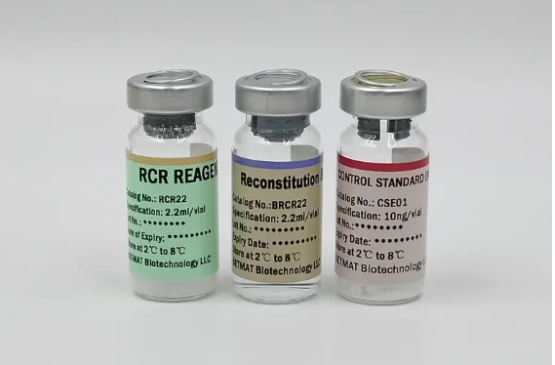
DOVER, DE, UNITED STATES, June 9, 2026 /EINPresswire.com/ — The safety and quality control of parenteral pharmaceuticals, biologics, and medical devices depend heavily on the Bacterial Endotoxin Test (BET). Historically, Limulus Amebocyte Lysate (LAL), derived from the hemolymph of Atlantic horseshoe crabs, has served as the compendial standard for detecting pyrogenic contamination. However, expanding global manufacturing volume, evolving regulatory frameworks, and ecological concerns regarding wildlife populations have driven the industry to seek sustainable alternatives. To establish a future-proof testing pipeline, pharmaceutical developers require a high-performance and globally reliable rCR Endotoxin Test that delivers technical parity with conventional methods without relying on animal harvesting. Within this shifting paradigm, BETMAT has emerged as a key solution provider, utilizing biotechnology advancements to ease the transition from natural lysates to synthetic testing platforms.
The Scientific and Regulatory Context of the BET Transition
The traditional bacterial endotoxin test (BET) based on Limulus Amebocyte Lysate (LAL) operates through a proteolytic enzyme cascade initiated by Gram-negative bacterial lipopolysaccharides (LPS). The natural LAL pathway involves a series of endotoxin-sensitive serine protease zymogens, primarily Factor C, Factor B, and the proclotting enzyme. Upon interaction with endotoxin, Factor C becomes activated and subsequently activates Factor B. Activated Factor B then converts the proclotting enzyme into an active clotting enzyme, which cleaves a chromogenic or clot-forming substrate to generate a measurable analytical response. In kinetic chromogenic methods, the rate of color development is directly proportional to the endotoxin concentration within a defined assay range.
A known limitation of native LAL reagents is the presence of the Factor G pathway, which can be activated by (1→3)-β-D-glucans. These glucans may originate from cellulose-based materials, filtration systems, or fungal-derived process components and can produce non-endotoxin-related assay activation, potentially interfering with analytical specificity in certain sample matrices.
Early recombinant alternatives focused primarily on Recombinant Factor C (rFC) technology. Because rFC reagents contain only the endotoxin-sensitive Factor C component and exclude Factor G, they significantly reduce glucan-associated interference. Most rFC assays employ fluorogenic substrate detection systems based on direct activation of recombinant Factor C. Although highly sensitive and specific, these assay formats differ mechanistically from the complete multi-enzyme cascade used in traditional chromogenic LAL methods, which may require additional method suitability and implementation assessments depending on product type and regional regulatory expectations.
The development of Recombinant Cascade Reagent (rCR) technology introduced a more structurally analogous approach to conventional LAL assays. By recombinantly expressing the major cascade components—including recombinant Factor C, recombinant Factor B, and recombinant proclotting enzyme—the rCR system reproduces the sequential enzymatic amplification mechanism characteristic of natural LAL. When combined with a chromogenic substrate, the assay generates a kinetic chromogenic response comparable to traditional compendial kinetic chromogenic BET methods, facilitating integration into established laboratory workflows and supporting alignment with current pharmacopeial testing practices.
Technical Architecture of the BETMAT rCR Solution
The core of the BETMAT solution is its specialized Recombinant Cascade Reagent (rCR) system designed for kinetic chromogenic endotoxin testing. By reconstructing the complete endotoxin-sensitive enzymatic cascade through recombinant technology, the BETMAT rCR assay closely replicates the reaction mechanism and analytical performance characteristics of traditional chromogenic LAL assays while providing several important technical advantages.
Elimination of Factor G Interference
Because the formulation contains only the recombinant proteins associated with the endotoxin-specific pathway, the glucan-sensitive Factor G pathway is entirely absent. This design minimizes false-positive responses associated with (1→3)-β-D-glucan interference, reducing unnecessary retesting and analytical investigations in pharmaceutical manufacturing environments.
Improved Lot-to-Lot Consistency
Natural LAL reagents are subject to inherent biological variability associated with the collection and processing of horseshoe crab lysate. In contrast, BETMAT manufactures recombinant cascade proteins under tightly controlled production conditions, supporting high lot-to-lot consistency, stable assay performance, and reproducible standard curve characteristics over extended use periods.
Workflow Compatibility and Method Alignment
The kinetic chromogenic response generated by the BETMAT rCR assay is compatible with standard incubating microplate readers and conventional kinetic chromogenic BET workflows. Assay configurations, including reaction volumes, microplate formats, and incubation parameters, are designed to align closely with established compendial chromogenic methods, facilitating implementation within existing laboratory systems.
The assay mechanism is based on the enzymatic cleavage of a synthetic chromogenic peptide substrate. In the presence of bacterial endotoxins, Recombinant Factor C is activated and subsequently activates Recombinant Factor B and the Recombinant Proclotting Enzyme in a sequential protease cascade. The activated clotting enzyme then cleaves the chromogenic substrate, releasing para-nitroaniline (pNA), which produces a measurable yellow color. The increase in absorbance is monitored kinetically at approximately 405 nm, and the reaction time required to reach a defined absorbance threshold is inversely correlated with the endotoxin concentration over the validated assay range.
Ensuring Compliance and Mitigating Risk in Pharmaceutical Supply Chains
For global pharmaceutical manufacturers, the adoption of alternative endotoxin testing methods requires careful evaluation of both regulatory acceptance and supply chain stability. A significant milestone in this transition is the introduction of United States Pharmacopeia (USP) Chapter , “Bacterial Endotoxins Test Using Recombinant Reagents” (effective May 2025), which establishes a compendial framework for recombinant reagent-based endotoxin testing, including recombinant cascade reagent (rCR) methodologies. The incorporation of recombinant technologies into major international pharmacopeial systems provides a clearer and more standardized pathway for implementation and validation of animal-free endotoxin testing approaches.
Transitioning to recombinant reagents also helps reduce dependence on biologically sourced raw materials and minimizes potential supply chain risks associated with environmental regulations, harvesting limitations, and fluctuations in horseshoe crab populations. This contributes to greater long-term supply stability for pharmaceutical quality control laboratories operating high-throughput commercial testing programs.
In addition, implementation of the BETMAT rCR assay supports broader corporate sustainability objectives. By adopting an animal-free endotoxin testing methodology, pharmaceutical manufacturers can reduce reliance on marine-derived biological resources while maintaining stringent endotoxin control standards required for regulated parenteral products. This approach is consistent with the principles of the 3Rs (Replacement, Reduction, and Refinement) and supports the development of scalable, sustainable quality control operations for modern biopharmaceutical manufacturing.
Operational Implementation and Practical Parity
Implementation of the BETMAT rCR assay requires minimal modification to existing laboratory infrastructure. The assay is designed to integrate directly into standard 96-well microplate workflows commonly used for kinetic chromogenic bacterial endotoxin testing. Data acquisition and analysis can be performed using conventional microplate reader software capable of monitoring absorbance at approximately 405 nm and calculating reaction onset times or kinetic parameters based on validated standard curves.
Analytical performance studies demonstrate that the recombinant cascade system provides high sensitivity, with detection capability down to 0.001 EU/mL and a validated quantitative range typically spanning 0.001 to 10 EU/mL, depending on assay configuration and instrument settings. Product suitability evaluations, including inhibition/enhancement testing through endotoxin recovery studies, indicate that the BETMAT formulation maintains reliable performance across a broad range of pharmaceutical matrices, including small-molecule injectables, buffered formulations, and biologic products. This compatibility supports method transfer and facilitates implementation with limited assay re-optimization.
The applicability of the rCR platform extends across multiple stages of pharmaceutical manufacturing and quality control. The assay is suitable for testing raw materials, in-process samples, finished formulations, pharmaceutical water systems, cleaning validation samples, and selected medical device applications. As with all compendial endotoxin methods, complex sample matrices may require standard method suitability validation to confirm the absence of assay interference. However, the elimination of glucan-reactive pathways and the reduction in false-positive investigations can contribute to improved operational efficiency and reduced long-term analytical burden.
Conclusion
The evolution of bacterial endotoxin testing points toward sustainable, chemically defined reagents that match the sensitivity of traditional methodologies. By engineering a complete multi-protein recombinant cascade, BETMAT provides a solution that replicates the performance of natural LAL while removing the risk of Factor G interference and biological lot variability. As international regulatory bodies implement USP and expand support for animal-free alternatives, the technical stability and consistency of the BETMAT rCR assay provide a clear pathway for modernizing quality control operations without compromising drug safety.
For more technical specifications, validation documentation, and detailed product listings, visit the official website: https://www.betmatbio.com/.
BETMAT BIOTECHNOLOGY LLC
BETMAT BIOTECHNOLOGY LLC
+86 18101764785
sales@betmatbio.com
Legal Disclaimer:
EIN Presswire provides this news content “as is” without warranty of any kind. We do not accept any responsibility or liability
for the accuracy, content, images, videos, licenses, completeness, legality, or reliability of the information contained in this
article. If you have any complaints or copyright issues related to this article, kindly contact the author above.

Media gallery